HOW TO CHOOSE A WEDDING PHOTOGRAPHER
Without Regretting It Later
What Actually Separates
Good From Generic
Good From Generic
If you’ve spent any real time looking for a wedding photographer, you’ve probably already felt it.
After a while, everybody starts sounding the same.
“Natural and relaxed.” “Documentary style.” “Capturing authentic moments.” “Telling your story.”
Different websites. Different logos. Same vague feeling.
And honestly, I think that’s part of why choosing a photographer feels weirdly difficult now. You’re trying to make a pretty big decision based on people who often present themselves in almost exactly the same way. Everyone says they’re relaxed. Everyone says they shoot candidly. Everyone says they care about moments.
But weddings aren’t all the same. Couples aren’t all the same. And photographers definitely aren’t all the same once you get past the homepage wording.
So instead of giving you another article full of generic advice and checklist questions, here’s the stuff I genuinely think matters when you’re trying to figure out who you trust with your wedding.
Because that’s really what you’re doing.
Why Choosing A Wedding Photographer
Feels so different
Feels so different
With most suppliers, you can sense-check before you commit. You taste the food. You hear the band. You see the flowers.
With a photographer, you’re handing over real money for something that doesn’t exist yet. The photos arrive after the wedding. By then it’s done.
That’s why it feels bigger than it probably should. And that’s why it’s worth getting right.
What actually tells you something
Ask For A Full Gallery.
Not a portfolio.
Not a portfolio.
A portfolio is a greatest hits album. The best 20 frames from 50 weddings. Of course it looks good. It’s supposed to.
What you actually want is a full gallery from one wedding. Start to finish. Morning nerves to last song. Any photographer worth hiring will say yes without flinching.
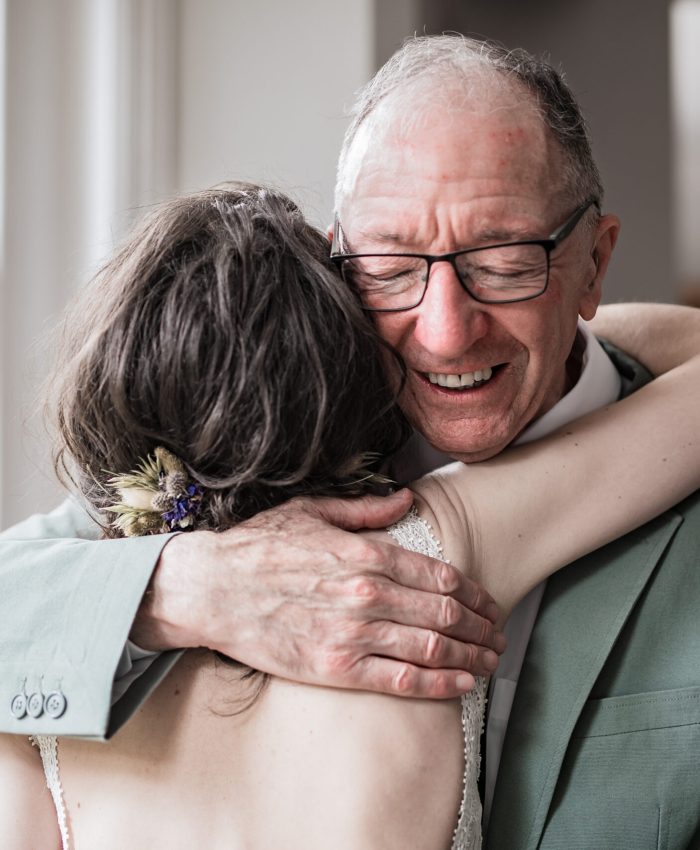
When you look at it, here’s what you’re actually checking. Does the quality hold when the light gets hard? A dark ceremony room. A windowless hotel corridor. A marquee at 2pm in August. Do the quiet moments look as considered as the big ones? Your nan doing that thing she does. Your dad barely holding it together. The two of you before it all kicks off, just looking at each other.
300 photos in a row tells you more than 20 cherry-picked ones ever will.
Pay Attention to What They Actually Care About
There’s a difference between a photographer who talks about your day and one who talks about their photos.
The good ones talk about people. About reading a room before something happens. About being in the right place without being asked. If someone’s mostly talking about their editing style or their awards, they might still be brilliant. But notice what they actually care about.
And do they have a real opinion? Because photographers who stand for nothing tend to produce nothing in particular. If they can’t tell you clearly what they won’t do, or what they think most photographers get wrong, that’s useful information.
Look at How They Edit Properly
Trends move fast. The dark moody look that was everywhere five years ago already feels dated. The muted greens doing the rounds on Instagram right now will feel the same way before long.
You’re going to be looking at these photos in 20 years. You want them to look like your wedding day, not like a particular moment in Instagram history.
Honest colour. Accurate skin tones. Light that looks like the light that was actually in the room. That’s what holds up. When you look at their work, ask yourself: does this look like real life? Or does it look like someone ran a filter over real life?
Both can be beautiful right now. Only one of them stays that way.
Get On A Call
Or Grab A Coffee.
Or Grab A Coffee.
Your photographer is going to be the most present person at your wedding who isn’t actually in it. That’s not a small thing.
If they make you feel self-conscious or like you’re performing for the camera, that feeling will be in your photos. Documentary photography only works when people properly relax. And people only properly relax when they genuinely like who’s holding the camera.
Ask yourself, honestly: am I already relaxed talking to this person, or am I trying to make a good impression? Do they make me laugh? Does it feel like they actually want to shoot my wedding, or are they just moving me through a process?
If you can’t imagine telling them something isn’t working in a 30-minute call, imagine trying to do it on the day.
The Questions That Actually Tell You Something
Skip the boring ones. Every professional has backup equipment. Every professional is insured. Here’s what actually tells you something.
Can I see a full gallery from a wedding similar to mine? Already covered. Just ask it.
What do you need from us to do your best work? How they answer this tells you a lot about how the day will actually feel. Some photographers need trust. Some need a shot list. Some need to know about the difficult uncle. Know what you’re getting.
What’s your approach to formals? Even if posed family shots aren’t your priority, the answer tells you how directive they’re going to be across the whole day. Worth knowing.
What do you enjoy most? Optional. But the answer is almost always more honest than the rehearsed ones. And if what they say doesn’t match what you want, useful to find out now.
One Last Thing
All of that matters. And none of it matters quite as much as this.
When you look at a photographer’s work not one photo, not a highlights reel, but actually sit with a full gallery does something in you go quiet? Not “oh, that’s lovely.” Something more settled. A feeling like: yes. That’s what I want the day to feel like.
That’s your brain doing the work faster than you can articulate it. The questions above help you interrogate the feeling. But trust the feeling too.
If you’re already there, the rest is just confirmation.
Stuff Couples Usually Ask Me
Honestly, most couples know before they can properly explain why. You should feel comfortable talking to them. Comfortable enough to be yourselves around them. The photos usually follow that feeling.
Not really. Most of the day is observed naturally, but sometimes people need a bit of direction so they stop thinking about the camera. Family photos still need organising. Couple portraits still need space. The difference is whether the photography controls the day or responds to it.
Documentary Wedding Photography Explained
Usually somewhere between 400 and 800 images depending on the size of the wedding and what actually happens during the day.
Partly, yes. Editing trends change quickly, so it’s worth choosing work that still feels natural and believable years later rather than heavily trend-led.
Sometimes. Bigger weddings with multiple locations can benefit from it, but honestly, a second photographer matters less than couples think. The bigger difference is whether your photographer knows how to anticipate moments properly.
Not remotely as much as you think it does. Most people feel awkward for the first ten minutes because almost nobody spends their life being professionally photographed. The important bit is whether your photographer helps you relax instead of making you more aware of the camera.
Most couples who say this are really talking about awkward posing, which is a completely different thing.
Dana Lewis is a documentary wedding photographer based in Shropshire, shooting across Staffordshire, the West Midlands, Worcestershire and wherever the wedding takes her. She shoots 25 weddings a year. Deliberate choice. No conveyor belt, no assistant shooting half your day. Every wedding gets her full attention.
Pricing from £2,500. Replies are fast. WhatsApp is on the table.